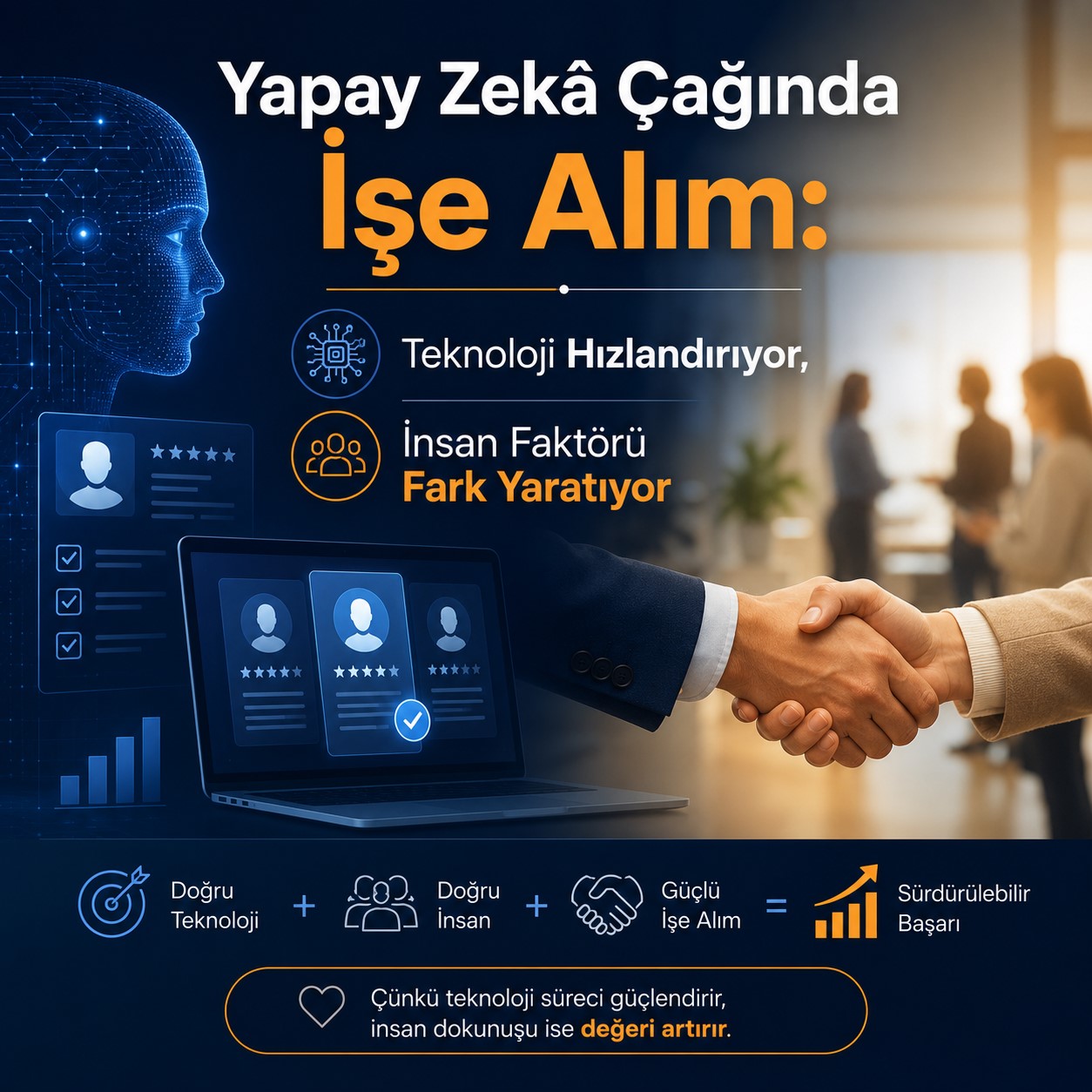
As the business world evolves rapidly through digital transformation, human resources has become one of the primary functions driving this change. In recruitment, AI-powered technologies are providing organizations with significant advantages in candidate sourcing, application management, data analysis, and operational efficiency.
Today, both candidates and employers are leveraging technology more extensively throughout the hiring process. Candidates use AI-powered tools to build stronger résumés, better showcase their skills, and access career opportunities more quickly. Employers, meanwhile, rely on digital solutions to manage growing application volumes and optimize recruitment workflows.
However, this transformation raises an important question:
As technology makes recruitment more efficient, does it reduce the value of the human element?
The answer depends entirely on how technology is positioned within the recruitment process.
A successful hiring process is about far more than identifying keywords, filtering résumés, or accelerating application reviews. The true value lies in understanding a candidate's experience, potential, motivation, and cultural fit.
Matching the right talent with the right opportunity requires evaluating both technical and behavioral competencies, understanding career aspirations, analyzing organizational needs, and building long-term employment relationships that create lasting value.
Artificial intelligence can play a powerful supporting role throughout this process. By analyzing large volumes of data, AI enables recruitment teams to make faster, more objective, and more data-driven decisions. It also automates repetitive administrative tasks, allowing HR professionals to focus on strategic priorities.
Yet hiring decisions should never be based solely on technical qualifications. A candidate's willingness to learn, motivation, communication style, career ambitions, adaptability, and alignment with organizational culture remain fundamental factors in successful recruitment. This is where human judgment, professional experience, and meaningful communication continue to be indispensable.
In today's highly competitive talent market, candidates face challenges beyond simply creating a strong résumé—they must also stand out in an increasingly crowded application landscape. Employers are no longer searching only for technically capable professionals; they seek individuals who align with their organizational values, demonstrate growth potential, and can contribute sustainably over the long term.
For this reason, modern recruitment goes beyond filling vacancies. Its objective is to create the right match between people and organizations. Successful hiring establishes meaningful connections that add value both to a candidate's career journey and to an organization's long-term objectives.
The future of recruitment will be built on a hybrid model where technological speed and human insight work together. Artificial intelligence will continue to accelerate processes, strengthen analytical capabilities, and enhance decision support systems.
However, understanding people, recognizing potential, and building meaningful relationships will always remain at the heart of strategic talent decisions.
For candidates, success in the future job market will require more than a well-crafted CV. The ability to communicate one's value effectively, demonstrate authentic capabilities, build professional networks, and embrace continuous learning will become increasingly important.
Recruitment is evolving. Technologies, methodologies, and expectations continue to change. Yet one fundamental truth remains constant:
Connecting the right talent with the right organization.
Technology is a powerful tool that accelerates recruitment and supports better decision-making. However, lasting and successful hiring decisions still depend on understanding people, recognizing potential, and creating meaningful matches that generate sustainable value.
The future of human resources lies in combining the capabilities of artificial intelligence with human expertise to build stronger, more meaningful, and more sustainable connections between candidates and organizations. Technology can analyze data, optimize processes, and improve operational efficiency. But the ability to recognize potential, match the right talent with the right organization, and build relationships founded on trust will always remain uniquely human.
Have a critical role to fill?
Share your role and we'll present a qualified shortlist within 5-10 business days.