Confidentiality in Interviews: Building a Secure and Professional Recruitment Process
Confidentiality is one of the most critical elements of the recruitment process. Protecting candidates’ career plans and safeguarding an organization’s strategic hiring needs require controlled and secure communication throughout the entire process.
This becomes particularly important when a candidate does not want their current employer to know that they are considering a career move, or when an organization is recruiting for a position that has not yet been publicly announced.
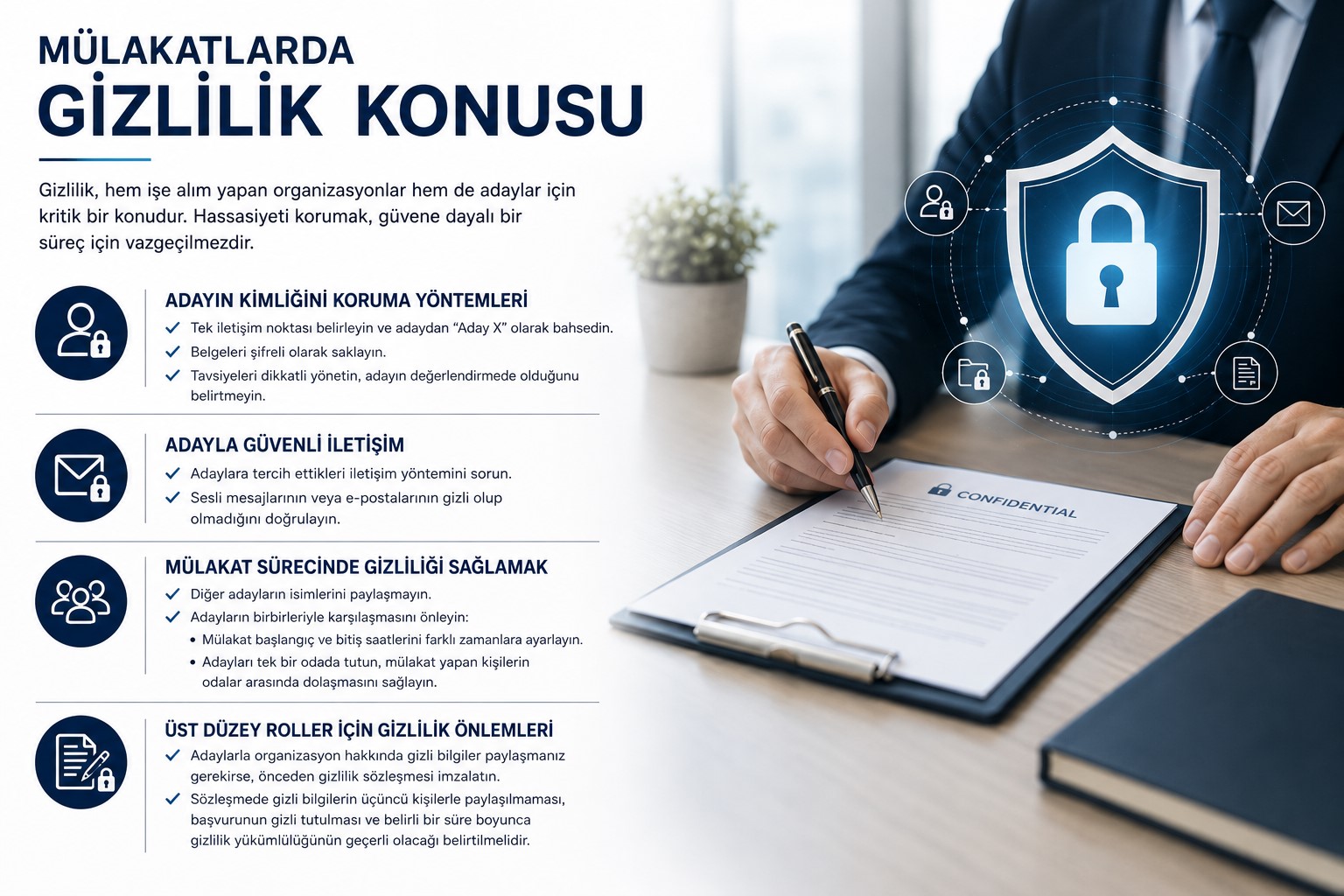
Protecting the Candidate’s Identity
Access to candidate information should be limited to individuals who are directly involved in the recruitment and decision-making process.
Establish a single point of contact: Whenever possible, communication with the candidate should be managed by one designated person. During initial internal evaluations, anonymous references such as “Candidate X” may be used when appropriate.
Protect recruitment documents: CVs, interview notes, assessment reports, and other recruitment-related documents should be stored securely and protected from unauthorized access.
Handle referrals carefully: If someone recommends a candidate who is already under consideration, simply thank them without confirming that the individual is currently part of the recruitment process. Any additional information or reference checks should be conducted without compromising the candidate’s confidentiality.
Communicating Securely with Candidates
Every candidate may have different working conditions and confidentiality expectations. At the beginning of the process, recruiters should therefore confirm the candidate’s preferred and safest method of communication.
Ask whether they prefer to be contacted via phone, personal email, or mobile phone, and confirm whether it is appropriate to leave voicemail messages or send emails containing recruitment-related information.
Sensitive recruitment communication should generally be avoided through a candidate’s current corporate email address or workplace telephone unless the candidate has specifically approved that channel.
Maintaining Confidentiality During Interviews
Confidentiality extends beyond protecting a candidate’s CV. The interview process itself should also be carefully managed.
Do not disclose the names, employers, or application status of other candidates. Interview start and finish times should be scheduled with sufficient intervals to minimize the possibility of candidates meeting one another.
For particularly sensitive or senior-level searches, candidates may remain in a designated interview room while interviewers move between rooms.
Additional Measures for Senior and Confidential Roles
Executive searches may require organizations to share sensitive information regarding business strategy, organizational structure, financial performance, investments, restructuring plans, or projects that have not yet been publicly announced.
In such cases, organizations may consider using a Non-Disclosure Agreement (NDA) before sharing detailed confidential information.
The agreement should clearly define:
- the candidate’s obligation not to disclose confidential information about the role or organization to third parties,
- the requirement to keep the application and recruitment process confidential,
- the scope and duration of the confidentiality obligation.
Confidentiality Is Part of the Candidate Experience
In a professional recruitment process, confidentiality is more than a procedure or documentation requirement. It demonstrates respect for the candidate’s career, current employment relationships, and personal information.
For organizations, it also helps protect strategic vacancies, leadership changes, restructuring initiatives, and hiring plans that have not yet been publicly disclosed.
The care given to confidentiality forms the foundation of trust.
When applied effectively, confidentiality principles strengthen the candidate experience, protect organizational reputation, and contribute to a more secure, ethical, and professional recruitment process.
Have a critical role to fill?
Share your role and we'll present a qualified shortlist within 5-10 business days.